In Filipino Martial Arts (FMA), the space between two FMA practitioners is governed by 3 ranges: largo mano (long range), medio (medium range), and corto (close range) where spatial management dictates both offense and defense. Rather than static zones, distance in FMA is a fluid continuum determined by the tip-to-tip reach of the weapons in hand (sticks, edged blades) or empty hand to empty hand, where even an inch can mean the difference between defanging the snake (disarming, disabling, or destroying the opponent’s limb) or stepping directly into an opponent’s striking line. Every step, angle, and footwork shift recalibrates this engagement measure, balancing weapon reach with reaction time to dictate whether practitioners exchange at long-range weapon distance, clash at checking range, or collapse into tight punyo (fist or pommel) strikes, disarms, and grappling.
The Bashi Channel is like that distance between two opponents but on a massive, oceanic scale. Spanning roughly 185 to 250 kilometers between Orchid Island (Taiwan) and the Batanes (Philippines), it’s not just a gap on a map; it’s a high-energy waterway that has shaped the grit of our ancestors for millennia.
What is a “Channel”?
In geography, a channel is a wide strait or a waterway between two relatively close landmasses. The Bashi Channel serves as the primary deep-water conduit connecting the South China Sea to the Philippine Sea. It is a critical node for global ocean dynamics, featuring a sill depth (lowest elevation at which water can flow freely from one basin to another) of approximately 2,400 meters, which makes it one of the deepest passages in the region.
If you want to find this legendary stretch of water, look exactly at 22°00′N, 121°00′E. It is bounded to the north by Orchid Island (Lanyu), administered by Taiwan, and to the south by Mavulis Island (also known as Y’ami), the northernmost point of the Philippine Batanes archipelago. At its narrowest point, the navigational corridor is only about 80 kilometers wide, making it a tight squeeze for the massive volume of water—and warships—that pass through it daily.
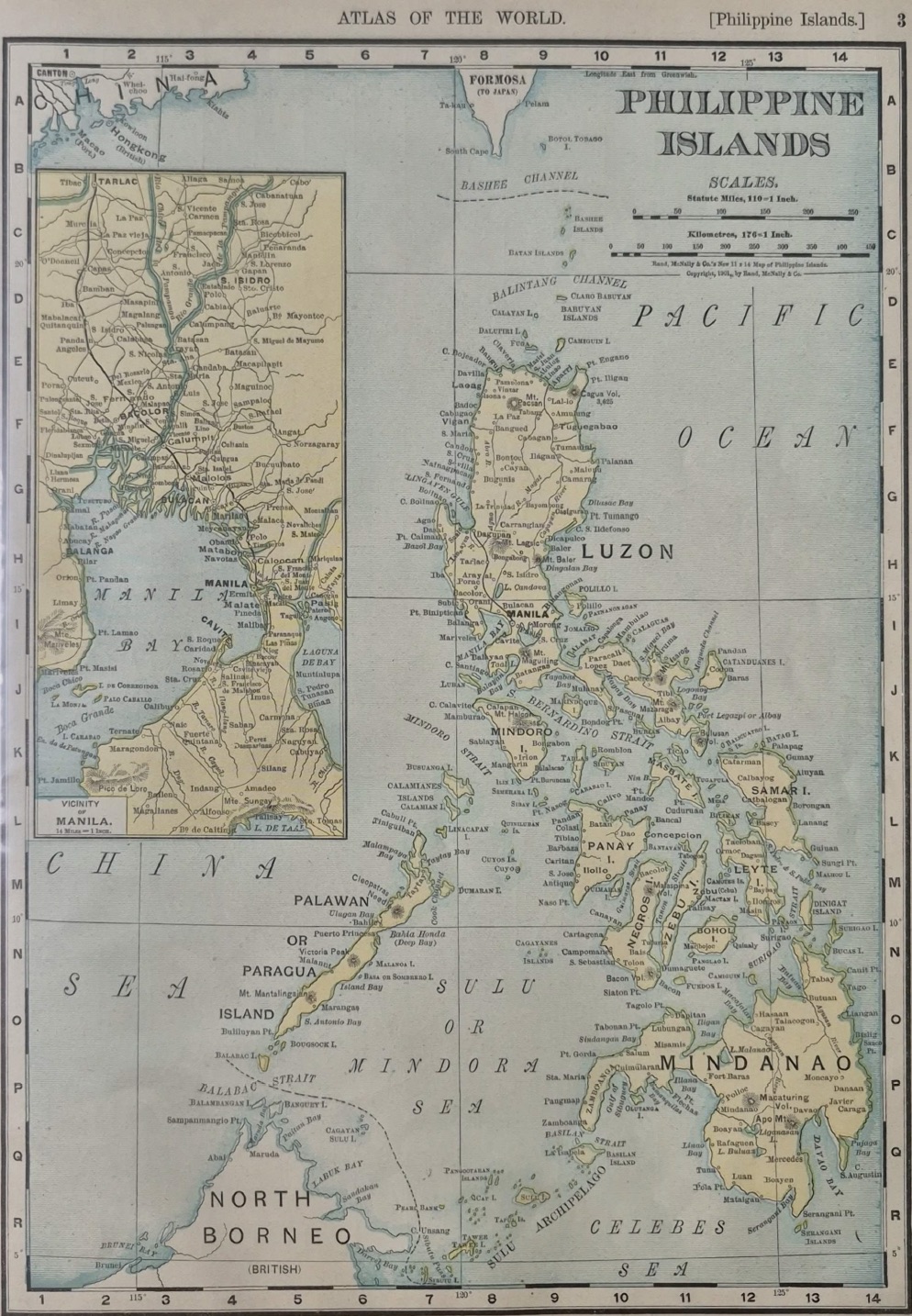
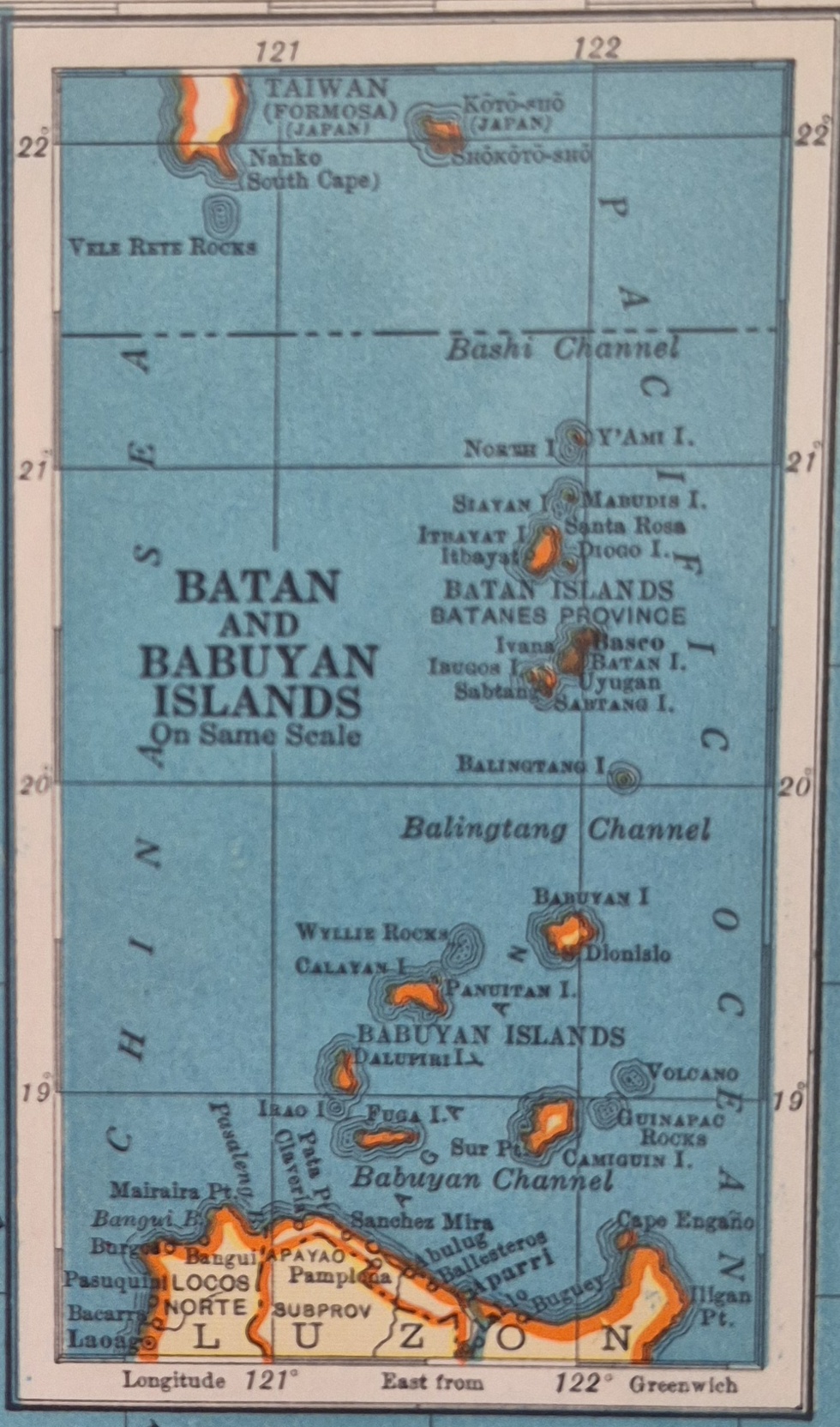
The Gauntlet: Why It’s Not a Leisurely Cruise
Whether you are a Neolithic paddler or a modern sailor, the Bashi Channel is a formidable opponent. Here is why:
- The Kuroshio Current (The Black Tide): This is the ultimate sparring partner. The Kuroshio is a warm, powerful western boundary current with surface velocities screaming along at up to 9.0 km/h. For an ancient mariner in a hand-paddled boat, this current acted as a massive lateral force. If your “footwork (navigation) was off, the current would sweep you into the open Pacific—a danger so great that ancient Chinese navigators called it Wei-Lu, the “stream of no return”.
- Typhoon Alley: The channel sits right in the heart of the world’s most active storm track. When the powerful Northeast Monsoon blows against the northward-flowing Kuroshio, it creates “wave steepening,” generating force-seven gales and chaotic waves exceeding 4 meters in height.
- Modern Proof of Ancient Grit: In June 2026, a crew of 20 Tao warriors retraced this route in a traditional wooden vessel named Ovayan. Even with support ships, they faced conditions so rough that 80% of their boat was submerged at one point near Y’ami Island. Their success proved that ancient seafaring was not a matter of luck, but a sophisticated science of wayfinding using star paths, moon phases, and wave patterns.
Why Cross the Bashi Channel?
You might ask why our ancestors would risk their lives on the “Black Tide”. The rationale was simple: survival, trade, and prestige.
- Migration: It was the primary highway for the “Out of Taiwan” expansion roughly 4,000 years ago, facilitating the spread of the Austronesian language family across the Pacific.
- Trade (The Jade Road): For over 2,000 years, seafarers ran a high-stakes logistics network. They carried raw green nephrite (jade) from eastern Taiwan to workshops in the Batanes. In exchange, they brought back Batanes gold, agricultural seeds like the Chinese yam, and the ultimate status symbol: cured cowhide armor.
- Kinship: The Tao and Ivatan peoples are cousins bound by a “Golden Friendship”. Despite 300 years of colonial separation, their languages remain 60% to 80% mutually intelligible, and their shared rituals, like the Flying Fish Festival, are still synchronized to the movements of the sea.
What Makes Bashi Unique?
The Bashi Channel stands apart from other channels like the English Channel or the Strait of Gibraltar due to its hydrodynamic intensity and geopolitical weight.
- Oceanographic Engine: Its 2,400-meter depth allows for massive deep-water exchange between the Pacific and the South China Sea, driving regional climate and nutrient distribution.
- Geopolitical Chokepoint: Today, the channel has evolved from a jade-trading highway into a critical military chokepoint within the “first island chain”. Because it is a deep-water passage, it is one of the few places where submarines can transit into the deep Pacific without being easily detected, leading to constant naval monitoring by global powers.
- The Cultural Umbilical Cord: Unlike most strategic waterways, the Bashi Channel is a “living” cultural bridge. It is the only place in the world where an international maritime border is ignored by the shared vocabulary and ancestral memories of the people on either side.
The Bashi Channel is more than just water; crossing it is a testament to human resilience. Our ancestors didn’t see it as a barrier, but as a bridge—a high-energy highway that defined the very identity of the seafaring people who crossed it.
Sources:
- Bashi Channel, Grokipedia.
- Gemini Deep Research – The Bashi Channel Maritime Corridor
- Taiwan in Time: When island neighbors became strangers, Han Cheung, Taipei Times, June 14, 2026.
- Taiwanese Jade in the Prehistoric Period and Its Dispersal into Southeast Asia, Hsiao-Chun, Hung, Brill: Encyclopedia of Taiwan Studies Online, November 11, 2023.
- The Batanes Nephrite Artefact, Hsiao-Chun, Hung & Iizuka, Yoshiyuki, December 2013.
- Indigenous Tao boat overcomes rough seas to arrive in Philippine isles, Focus Taiwan CNA English News, June 17, 2026.
- Tao people from Orchid Island recreate ancient route, Formosa News, YouTube, June 17, 2026.
- Different Islands, Same Tongue, TaiwanPlus Docs, YouTube, August 25, 2023.
- Flying fish festival (Taiwan), Wikipedia, viewed August 14, 2026.
- Tao Ocean Spirit Belief, Taiwanese Deities, viewed August 14, 2026.
- Indigenous Taiwanese to paddle to the Philippines reconnecting long-lost route, Wang, Ann & Huang, Cheng-Chia, Reuters, June 15, 2026.


Leave a Reply